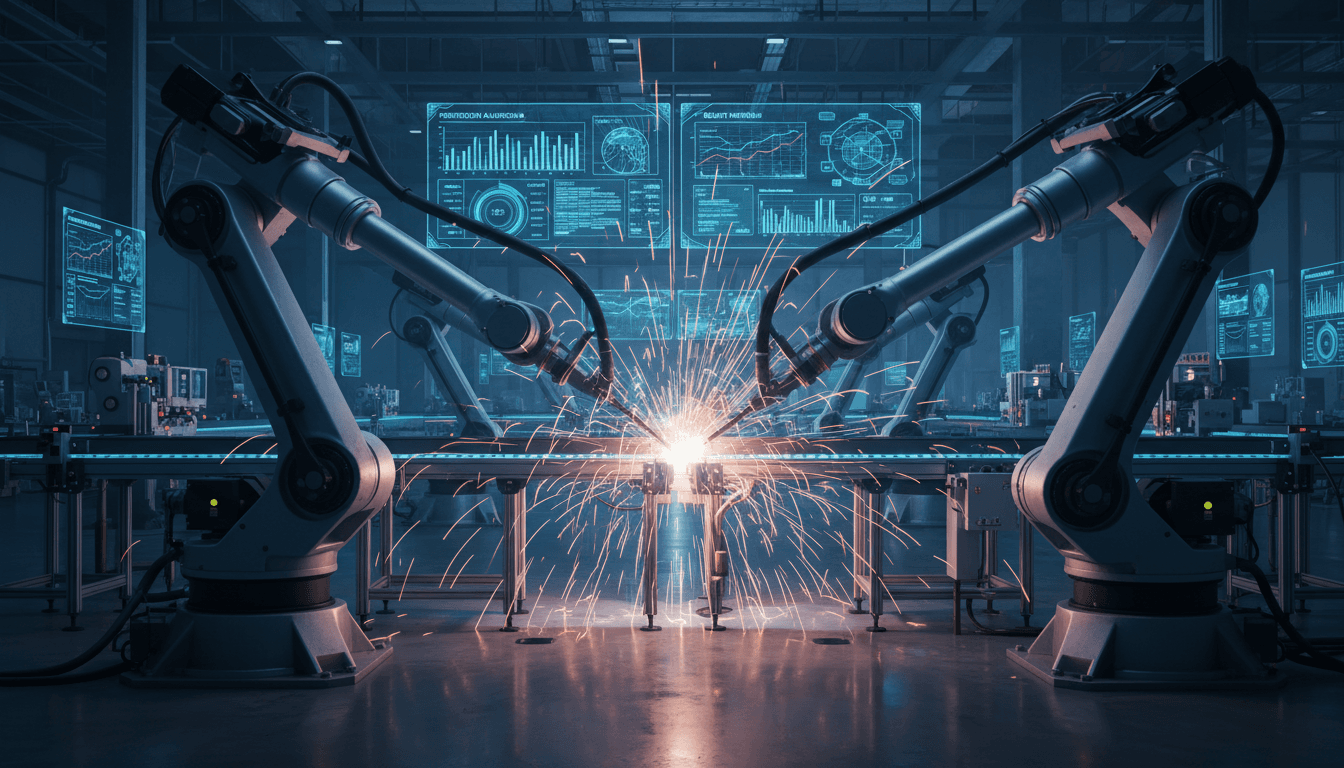
Manufacturing
Drive smart factory adoption with AI-literate production teams
Industry 4.0 promised smart factories. AI is delivering them. Predictive maintenance, automated quality inspection, supply chain optimization, and digital twins are no longer theoretical — they're running on production floors today. But the gap between installing sensors and actually using AI effectively is enormous. kju.ai closes it by building AI knowledge in the teams who operate, maintain, and manage manufacturing systems.
Challenges
Key AI challenges in this industry
The obstacles your teams face when adopting AI — and where kju.ai helps.
Predictive Maintenance
Unplanned downtime costs manufacturers an estimated $50B annually. AI models can predict equipment failure before it happens — but maintenance teams need to understand model inputs, confidence intervals, and how to integrate predictions into existing work-order systems.
Automated Quality Inspection
Computer vision systems can inspect products at line speed with sub-millimeter accuracy. Deploying them effectively requires quality teams to understand model training, edge cases, and how to set appropriate defect thresholds without over-rejecting good product.
Supply Chain Optimization
AI-driven demand sensing, inventory optimization, and logistics routing can absorb supply chain volatility that human planners can't. Planning teams need to trust — and validate — these systems, especially when recommendations contradict intuition.
Digital Twins & Process Optimization
Digital twin models simulate entire production lines, enabling what-if analysis and continuous process optimization. Engineering teams need to understand how these models are built, calibrated, and where their predictions break down.
Recommended Tracks
Tracks that matter most
The learning paths most relevant for teams in this industry.
AI Agents
Human-in-the-loop, planning algorithms, tool selection
Machine Learning
ML lifecycle, feature engineering, production trade-offs
MLOps
CI/CD for ML, data versioning, model registries
Neural Networks
Transformers, CNNs, graph networks, interpretability
By the Numbers
The AI opportunity
The data behind AI adoption in this industry.
$68.4B
projected global AI in manufacturing market by 2032, growing at 33% CAGR
Fortune Business Insights — AI in Manufacturing Market35%
reduction in unplanned downtime achievable with AI-driven predictive maintenance programs
Deloitte — Predictive Maintenance and the Smart Factory90%
defect detection accuracy in visual quality inspection using deep learning models
McKinsey — AI-driven operations in manufacturingFrequently Asked Questions
Common questions
Do our floor teams need technical backgrounds to use kju.ai?
Not at all. kju.ai adapts to each learner's skill level. Production operators, maintenance technicians, and quality inspectors learn through scenarios grounded in factory operations — how to interpret AI alerts, when to trust predictions, and how to escalate edge cases.
Which tracks are best for a manufacturing engineering team?
Start with Machine Learning for understanding model fundamentals, MLOps for production deployment, and AI Agents for process automation. Neural Networks is ideal for teams working with computer vision quality systems.
Can kju.ai help with Industry 4.0 adoption strategy?
Yes. Beyond technical skills, our content covers AI readiness assessment, build-vs-buy evaluation frameworks, and change management — helping leadership teams make informed decisions about where AI delivers real ROI on the factory floor.
Ready to Level Up on AI?
Book a personalised demo for your team.